
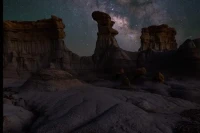
We’ve all been there before: straining your neck to look up in the dark, slack-jawed, and pausing for a minute to stare up at the stars when the night is especially dark and the constellations are especially bright. In Farmington and the surrounding parts of New Mexico, stargazing is easily accessible and particularly magnificent — and never better than during wintertime, when the brilliance above feels less like something towering over you and more like something welcoming you in.
Let’s look at what you’ll see during a New Mexico stargaze, as well as the best viewing locations, tips, and why winter’s the best time for it all.
Why winter nights shine the brightest
Whether in New Mexico or elsewhere, in many ways, the magic of winter can make it the best time to stargaze. It starts with longer nights, where darkness covers us more than any other time of year. Shorter days and earlier sunsets mean there’s simply more prime stargazing hours.
The atmosphere of this time of year also adds to the feel and the view; the cold air holds less moisture, reducing haze for a clearer view while feeling perfectly crisp and just right. This also means fewer clouds — you’ll experience the clearest stargazing nights during a New Mexico winter.
What formations can you see in Farmington’s winter sky?
During the wintertime, the skies are illuminated by the instantly recognizable Orion and the inimitably bright Pleiades, aka “Seven Sisters”, that lie within Taurus. Parts of Taurus and Orion also extend to form — along with Gemini, Canis Major, Canis Minor, and Auriga — the Winter Hexagon. This formation is six particularly bright stars from these constellations that together form a circular shape covering around a third of the sky each night. Depending on the time of winter, it’s usually at its highest point in the sky right around midnight or a bit before.
Best places to stargaze near Farmington
If you’re in Farmington during the winter, you have great options both in town and in the surrounding wilderness areas.
In Farmington proper, the San Juan College Planetarium is a fantastic resource. It’s accessible and is great for beginners, families, and anyone looking for help with identifying the finer points of the night sky. It also offers a unique monthly AstroFriday program from September through May, with talks and demonstrations on different astronomical themes. In 2026, for example, they’re presenting on Navajo constellations, the Artemis program, the astronomy of Harry Potter, and more.
If you want to get away from light pollution but stay near town, Glade Run Recreation Area is located within city limits but distant enough from street lighting that you’ll find yourself with a spectacular view. From there, there are additional trails that can take you to the top of the bluffs for a 360-degree view of New Mexico’s night sky. In fact, not only are the bluffs in Glade Run ideal for stargazing, but they’re also perfect for watching the sunset and even catching meteor showers when they occur.
What about wide open skies for stargazing away from the city?
The nature surrounding Farmington brings so many people here. The unbelievable views of the night sky are one more reason to visit. The Farmington area has multiple options for prime stargazing.
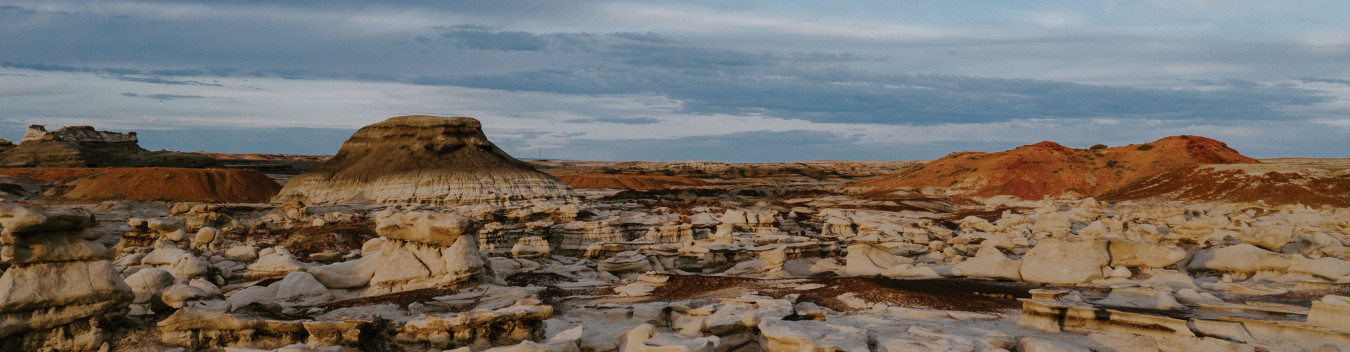
The Bisti/De-Na-Zin Wilderness, about 40 miles south of town, is a great place to consider. Despite being relatively close, it’s still quite remote with very little light pollution and vast horizon views. Keep in mind that there are no developed facilities on-site, so plan accordingly.
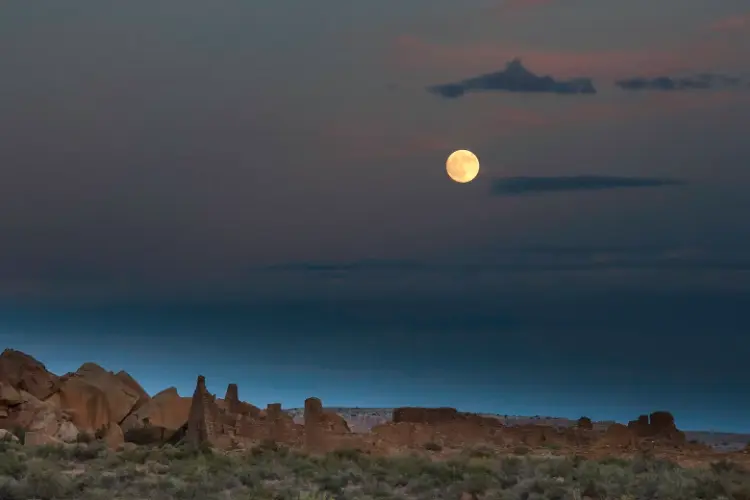
There’s also Chaco Culture National Historical Park, which is about an hour-and-a-half drive south-southeast from Farmington. If you’re able, this is a must for enthusiastic stargazers — designated as one of the world’s roughly 60 International Dark Sky Parks by DarkSky International, the nighttime sky view is one of the best in the country. Another reason to head to Chaco Culture National Historical Park is its ranger-led stargazing experiences and night sky programs.
Lastly, if you want to spend the night outdoors for continued stargazing, Navajo Lake State Park offers camping opportunities. It’s about an hour drive east of Farmington, and is a wonderful place to watch the sky all night long.
Planning the perfect winter stargazing night
If you’re new to stargazing intentionally, these are a few tips that will help you get the most magnificent views.
- Pick the right moon phase. New moons lead to darker skies, which means better views of the Milky Way. The less the moon is visible, the more brilliant the stars.
- Watch the forecast. For obvious reasons, clouds can get in the way of stargazing, but wind can also impact the experience, albeit more subtly.
- Keep timing in mind. Not all hours of the night are created equal when it comes to stargazing. A couple of hours after sunset brings true darkness, while stars, constellations, and asterisms can change their positions in the sky somewhat during the night. Our advice is to stay flexible, so you can make the most of the clearest night of the week.
- Be prepared. Winter stargazing means dressing in warm layers, including an insulated jacket, hat, gloves, warm socks, and boots. Camp chairs and blankets or sleeping bags will keep you comfortable, and a thermos of something hot makes the night even better. Bring binoculars and a sky map to deepen your understanding of what you’re seeing, and pack a headlamp with a red-light mode if you’ll be trekking to your viewing spot.
- If you plan on taking photos, come prepared — with your techniques, tools, and etiquette. That means no shining bright lights toward other viewers. If you have a camera, a wide aperture, tripod, and timer can create stunning images, but even with a phone you can still often get beautiful shots. Long exposure or night mode (no flash!) while stabilized on a tripod works very well.
Bottom line
There’s so much to do during winter in Farmington and beyond in this corner of New Mexico that stargazing can sometimes be overlooked in favor of daytime activities. But when the sun goes down, that’s when opportunities come along to experience something spectacular.
With the crisp views of winter, why not use Farmington as somewhere to play during the day and take in the awe of the sky at night?